- Joined
- Feb 9, 2026
- Messages
- 30
Hello, fellow forum members!
In this first post, I’d like to explain the theory behind drafting a Tight Skirt (Pencil Skirt) and share my basic calculation methods.
I use a 23-inch ruler, so my workflow involves calculating in centimeters first and then converting those figures into inches to match my physical tools.
Why use "Average" sizes instead of personal measurements?
As a beginner, using individual body measurements can lead to errors because personal "reference lines" are often inconsistent. By establishing a solid baseline using average body measurements first, it becomes much easier to apply custom alterations later.
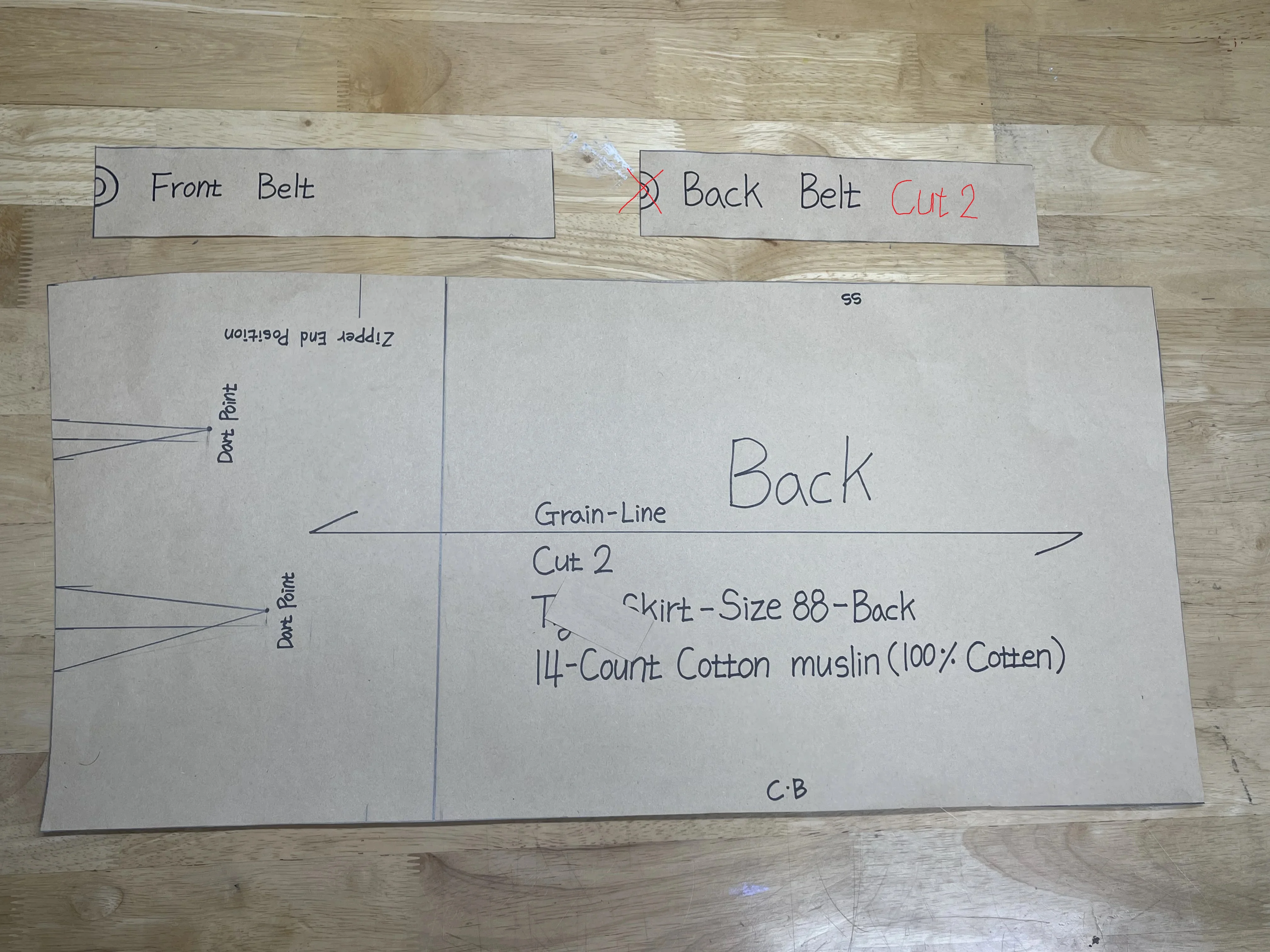
My Rule of Thumb: I stick to a 3-fitting rule (making three muslin prototypes). Before cutting fabric, I always create a "Pattern Sample Work Sheet" to guide the process.
Feel free to share or use this information if you are a fellow hobbyist! I plan to continue uploading my project progress here. I appreciate your interest!
I know the conversion between cm and inches can be confusing! I am working on a YouTube video to explain this more clearly. I will share the calculation method first, followed by a private video link showing the actual drafting process.
If you have any questions, please let me know! I will try to answer them in my upcoming videos.
A quick reminder: I am a beginner sharing my personal journey based on calculations I've studied online. I may not be familiar with professional industry-standard "shortcuts," so I ask for your kind understanding if I can't answer highly technical professional queries!
Thank you!
In this first post, I’d like to explain the theory behind drafting a Tight Skirt (Pencil Skirt) and share my basic calculation methods.
I use a 23-inch ruler, so my workflow involves calculating in centimeters first and then converting those figures into inches to match my physical tools.
The Standard: Size 88 (KR)
For this design, I am using Size 88 measurements. These represent the average body dimensions for this size category (Waist, Hip, Hip Length, and Skirt Length).Why use "Average" sizes instead of personal measurements?
As a beginner, using individual body measurements can lead to errors because personal "reference lines" are often inconsistent. By establishing a solid baseline using average body measurements first, it becomes much easier to apply custom alterations later.
My Goal
I want to share the process of finding problems and discovering solutions while drafting for a standard figure. As a hobbyist, my designs aren't perfect yet, but I am driven by the desire to create perfectly fitted, customized clothing through iterative refinement. I'm sharing everything here so we can all learn how to identify and fix pattern issues together.My Rule of Thumb: I stick to a 3-fitting rule (making three muslin prototypes). Before cutting fabric, I always create a "Pattern Sample Work Sheet" to guide the process.
Feel free to share or use this information if you are a fellow hobbyist! I plan to continue uploading my project progress here. I appreciate your interest!
Average Measurements for Size 88 (Women)
(Note: These are standardized tailored measurements, not specific to one individual.)- Waist Circumference: 92 cm
- Hip Circumference: 112 cm
- Hip Length: 20 cm
- Total Skirt Length: 60 cm
Drafting Tips
- Ease Allowance: It is best to add 2–4 cm of ease to the hip circumference. Since I am using 14-count cotton calico (muslin) with no stretch, I have opted for 4 cm of ease.
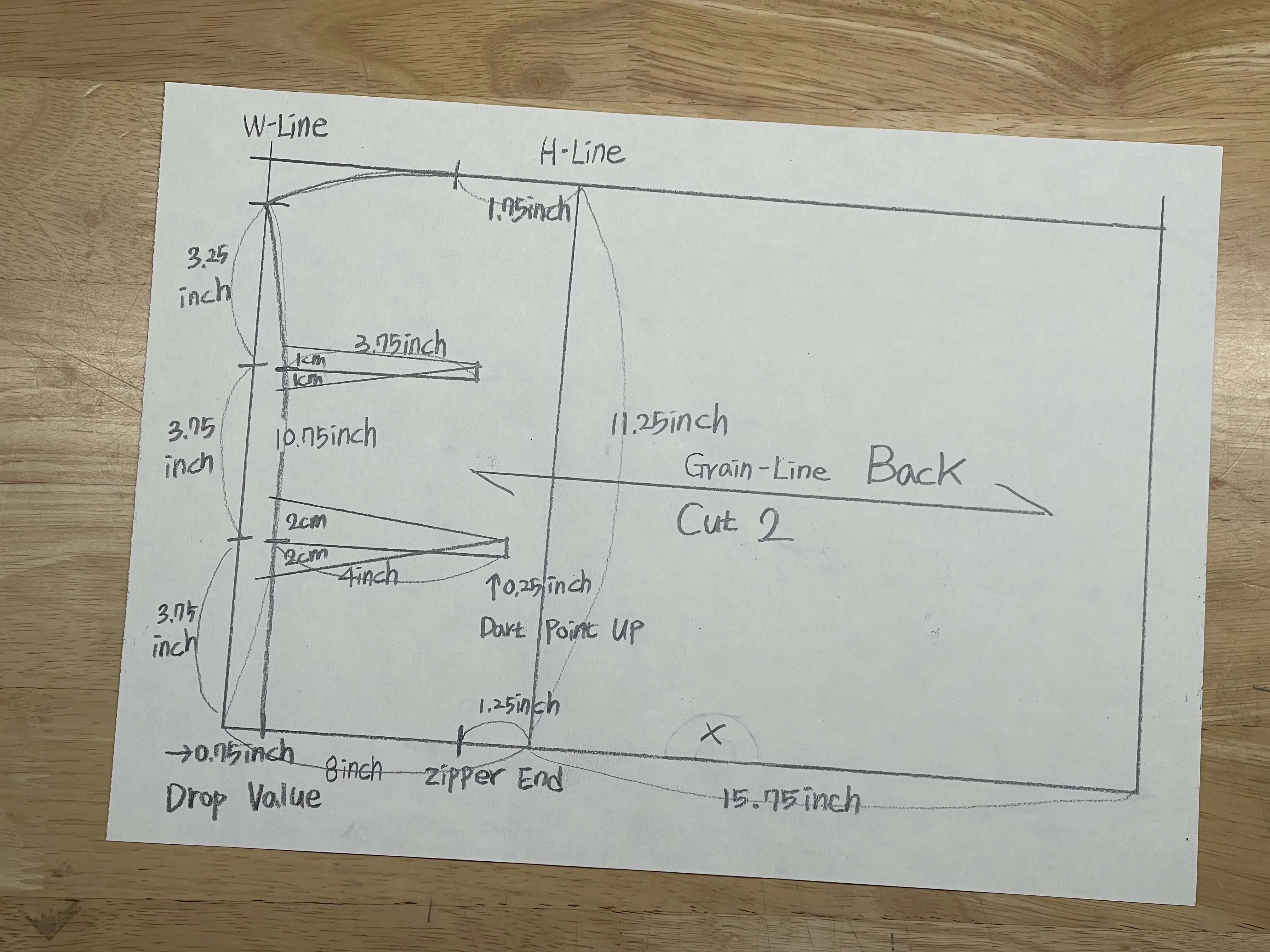
- Dart Distribution: Usually, 3D volume is created with two darts in the back and one or two in the front. To accommodate abdominal protrusion, I have distributed the darts 2:2 (Front:Back). I chose this because waistbands sometimes sit at or below the navel; without proper dart placement to follow the curve of the abdomen, the fabric can look awkward or "protrude" flatly. This is a hypothesis I am testing!
- Front vs. Back Balance: For figures with a prominent abdomen, raising the back waistline by 0.5–1 cm above the base line during drafting helps prevent the skirt from "hiking up" in the front when worn.
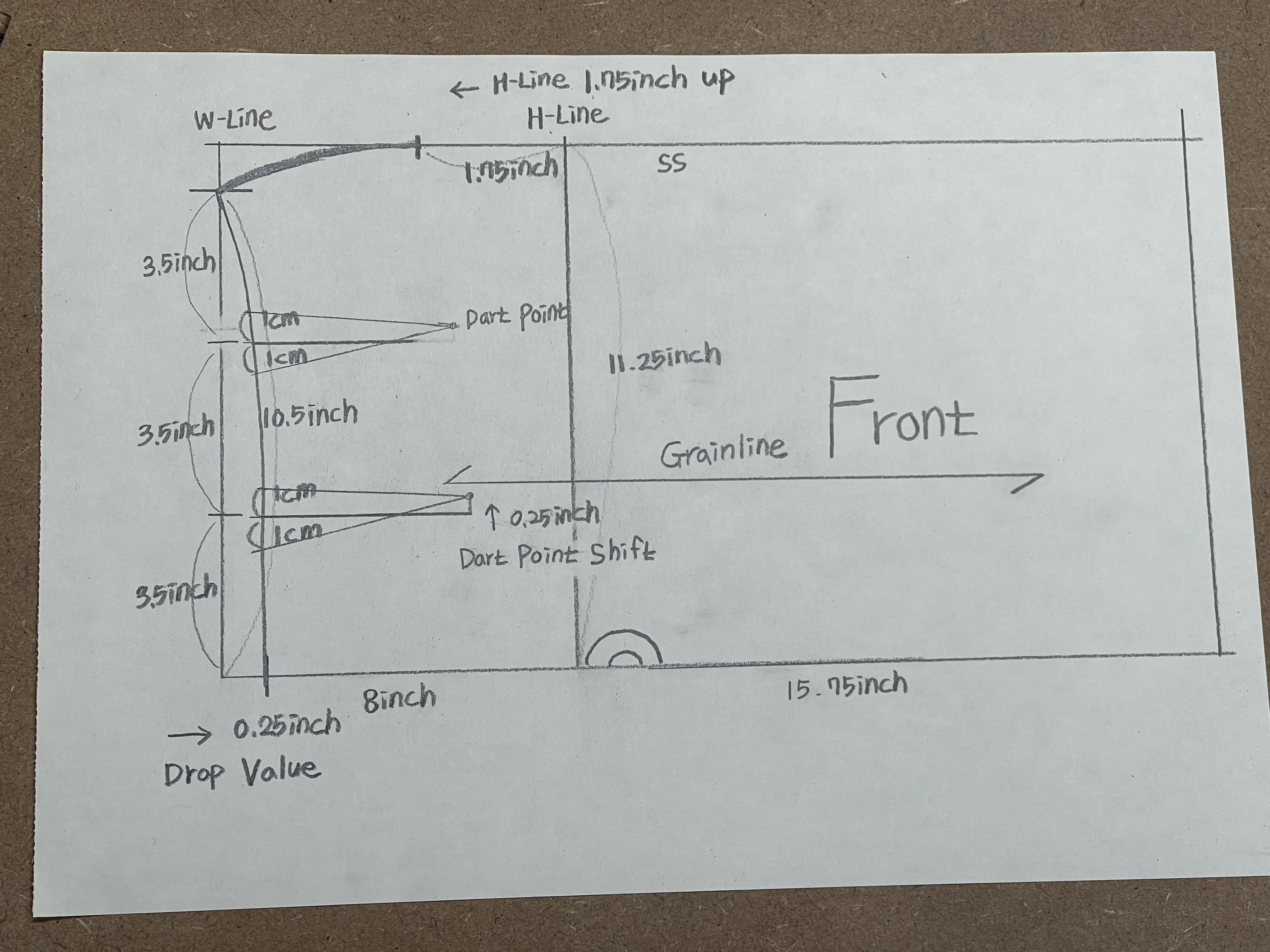
[ Calculation Logic: Front Panel ]
0. Basic Dart Distribution
- Total Dart Amount: (H/4) - (W/4)
- 28cm - 23cm = 5cm
- Distribution: Front 2 cm / Back 3 cm
1. Basic Hip Line (H-Line)
- Width:(H/4) / 2.54 + Ease = 11.25 inches
- 112cm / 4 = 28cm
- 28cm / 2.54 = 11.02 inches
- 11.02 + Ease = 11.25 inches
- Vertical (Hip Length):
- 20cm / 2.54 = 7.87 inches
- 7.87 + Ease = 8 inches
- Drop Value: 0.25 inches
2. Basic Waist Line (W-Line)
- Width:[(W/4) + 2cm(Darts)] / 2.54 + Ease + 0.5 inch (Extra Ease) = 10.5 inches
- 92cm / 4 = 23cm
- 23cm + 2cm = 25cm
- 25cm / 2.54 = 9.84 inches
- 9.84 + Ease = 10 inches
- 10 + 0.5 = 10.5 inches
- Vertical: Skirt Length - Hip Length = 15.75 inches
- 60cm - 20cm = 40cm
- 40cm / 2.54 = 15.75 inches
3. Dart Reference Lines
- W / 3 (Tri-sectioning): 10.5 inches / 3 = 3.5 inches
- Dart Width Distribution: Center Front 1 cm / Side 1 cm
- Dart Length: Center Front 5.25 inches / Side 4.75 inches
- Dart Point Shift: Move 0.25 inches toward the side seam.
I know the conversion between cm and inches can be confusing! I am working on a YouTube video to explain this more clearly. I will share the calculation method first, followed by a private video link showing the actual drafting process.
If you have any questions, please let me know! I will try to answer them in my upcoming videos.
A quick reminder: I am a beginner sharing my personal journey based on calculations I've studied online. I may not be familiar with professional industry-standard "shortcuts," so I ask for your kind understanding if I can't answer highly technical professional queries!
Thank you!
Last edited: